
Are Humans Really Needed to Supervise AI?
What rebuilding the Market Ralph website with AI taught me about the difference between AI executing work fast and a human knowing what should be executed in the first place.
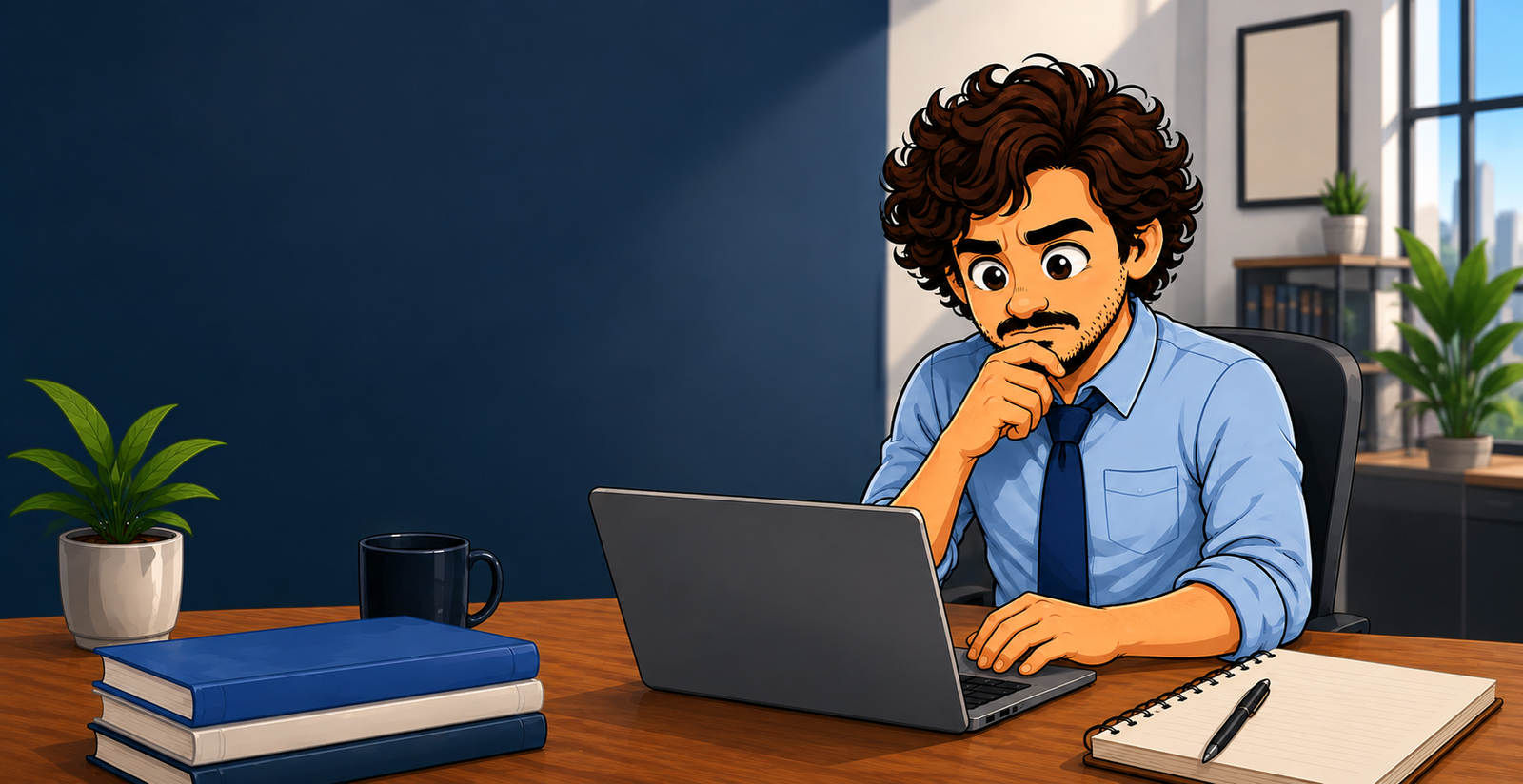
I can give you the short answer now, which is yes. Or, I can tell you how I found out through my own experience rebuilding Market Ralph with AI.
And perhaps "supervise" is not even the right word. What I learned is that AI can do an incredible amount of work, but someone still needs to understand what it is doing, why it is doing it and, most importantly, when it is doing something wrong.
The website builder experience
I originally created Market Ralph with a website builder that claimed the website was ready for the new world of LLMs and AI search. However, despite following its recommendations, doing the checks and trying different approaches, I still couldn't get the website to appear in AI-driven search the way I expected.
I then used more than three different LLMs to try to understand and solve the problem. And guess what? None of them got me to a working solution.
So, while I was preaching about the importance of preparing websites for the age of AI, my own website wasn't where I wanted it to be. The funny part is that I knew it.
However, I didn't make the change immediately. There is a personal reason for that which is probably better shared over a beer or in a face-to-face conversation. And no, it wasn't laziness.
Moving Market Ralph to HTML and PHP
I can now say that I finally had the chance to move the website and rebuild it using HTML and PHP. And yes, I rebuilt most of it with AI.
There is no way I could draw all the Market Ralph cartoons, write the code, create and edit the articles, work on the website and at the same time make sure everything is properly structured for SEO and GEO. AI has made it possible for me to do things that would previously have required several different skills, people or a lot more time.
But something interesting happened along the way.
At first, I found myself uploading a new HTML file every time I created an article or page. Then, whenever I noticed something that needed changing across the website, such as something in the footer, the AI tool would recreate multiple HTML files and I would have to upload them again.
It worked. But it wasn't a particularly smart way of building the website.
And this was only one of many little things I encountered.
Where human experience made the difference
Fortunately, I have been hands-on with websites, marketing, analytics and digital projects for many years. I am not a developer, but I understand enough about how websites work to recognize when something doesn't make sense.
Instead of continuing to generate and replace individual pages, I could tell the AI what I actually wanted: common elements such as the header and footer should be reusable, styling should remain consistent through shared CSS, and common functionality should not need to be recreated every time I added a page.
Once I explained the architecture I wanted, AI could help me build it.
That, for me, was the interesting part.
AI was perfectly capable of doing the work. But first, somebody had to recognize that the way we were doing the work was wrong.
The same principle goes far beyond building websites. You can give an AI tool a task and get a perfectly convincing answer, process, analysis or piece of code. The difficult part is knowing whether what you received actually makes sense.
So, are humans really needed to supervise AI?
I don't think this experience proves that every AI task needs a human looking over its shoulder. That would be an exaggeration.
What it showed me is something slightly different.
AI can make us incredibly fast at executing things. But speed of execution and knowing what should be executed are two very different things.
In my case, AI could write the code faster than I ever could. It could restructure pages, generate CSS, help with JavaScript, review SEO elements and do dozens of other things for me. What it couldn't replace was the experience that allowed me to look at the result and say, "There has to be a better way of doing this."
And I think that is where the role of experts is changing.
We may spend less time physically doing every individual task. Instead, more of our value may come from understanding the bigger picture, giving AI the right direction, recognizing when something is wrong and knowing what "good" should actually look like.
The lesson I took from this
There is one simple thing I wanted to share from the whole Market Ralph rebuild.
No matter how many AI tools we buy or how many processes we automate, expertise still matters. AI can dramatically increase what one person is capable of doing, but having access to a powerful tool does not automatically give you the experience to use it well.
My takeaway from all of this is very simple:
Trust your experts more than you trust your tools.